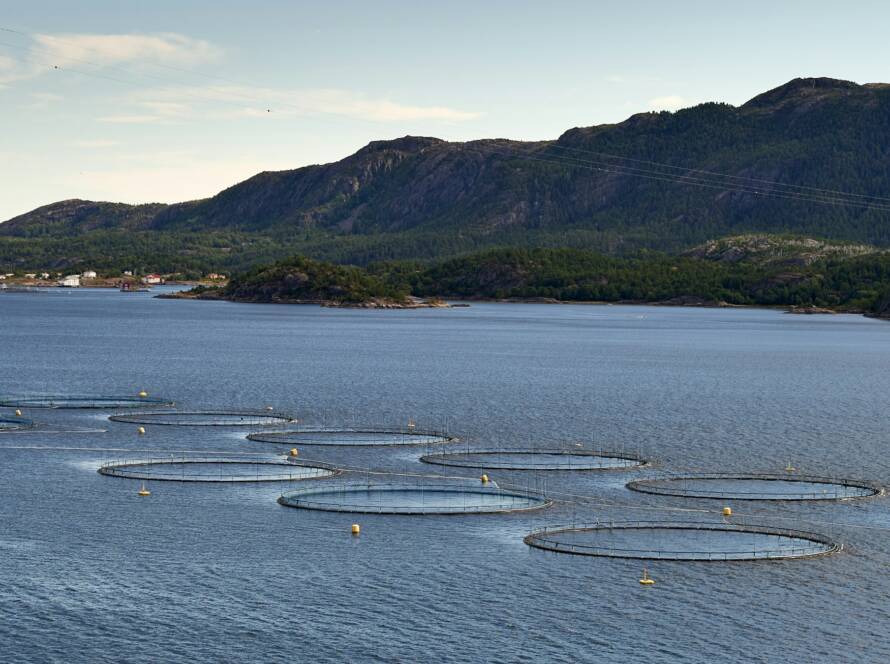
The Development and Sustainability Agenda for Åland defines a strategic direction for the islands’ sustainable development. Across specific Strategic Development Goals encompassing environment, economy, and society, the Agenda designates 2051 as the target year for when Åland should be fully sustainable.
Goal 4 of the Development and Sustainability Agenda acknowledges the importance of aquaculture for a robust economy and society. By 2051, the vision is for “aquaculture [to] increase and occur without negatively affecting the aquatic environment.”
But sustainable growth is only possible if aquaculture operates within safe ecological boundaries. Goal 3, which focuses on water quality and the health of the Baltic Sea ecosystem, notes that the management of nutrient emissions – including phosphorus and nitrogen – is crucial for ensuring healthy waters.
Åland’s aquaculture producers therefore have an essential role to play in reducing emissions, managing nutrients as resources, and securing sustainable ocean-based food production.
In the 2026 report, which provides a public record of how the Åland Islands is progressing in reaching the Agenda goals such as the reduction of emissions, the Åland Fish Farmers’ Association and the AQUAPHOENIX project were mentioned as promising example of how the sustainability agenda is being implemented in practice.

About AQUAPHOENIX
AQUAPHOENIX is a four-year EU-funded project working to collect and recycle aquaculture waste. It brings together industry actors, scientists and policy experts to demonstrate sludge collection technology: an innovative novel system technology that collects waste from open sea aquaculture pens and can be tailored to local conditions. The collected waste will then be filtered and stored for conversion into new assets including sustainable feed, fertilizer and energy sources.
AQUAPHOENIX is putting this novel sludge collection technology into operation across active fish farms in Norway and Åland. The project is also conducting extensive research to increase our knowledge of aquaculture’s environmental impacts and validate the potential of sludge collection technology to lessen emissions and harmful effects. Along with supporting novel policy guidance and governance mechanisms among key European and international actors, these activities will increase clean aquaculture production, reduce emissions and promote healthy seas.
AQUAPHOENIX in Åland: unique challenges and opportunities
In Åland, fish farming permits depend on compliance with strict regional limits for nitrogen and phosphorus emissions. To scale up production while safeguarding the environment, there is a pressing need to manage emissions. Sludge collection has the potential to reduce N+P emissions, thus allowing fish farmers to scale up production while ensuring healthy seas. The implementation of this technology in Åland and the Baltic Sea Region aims to enable fish farmers to scale up production without negatively affecting the environment, while creating new uses and value chains for recycled sludge and the nutrients it contains – including phosphorus, a crucial natural resource.
In recent discussions of the Development and Sustainability agenda, Åland Parliament member and former chairperson of the Åland delegation to the Baltic Sea Parliamentary Conference Wille Valve explained that through the collection and recycling of sludge, AQUAPHOENIX has the potential to provide a sustainable source of phosphorus.
AQUAPHOENIX to hold information session in Mariehamn
On June 2 2026, as part of the AQUAPHOENIX Annual General Meeting, project partners and regional and local actors will host an information session on the project’s work in Åland the potential of sludge collection and recycling to advance sustainable goals. Interested parties – including industry professionals, politicians, environmental actors, members of the press and the general public – are encouraged to attend and share their perspectives. Please stay tuned for more information.
With special thanks to Wille Valve and Rosita Broström