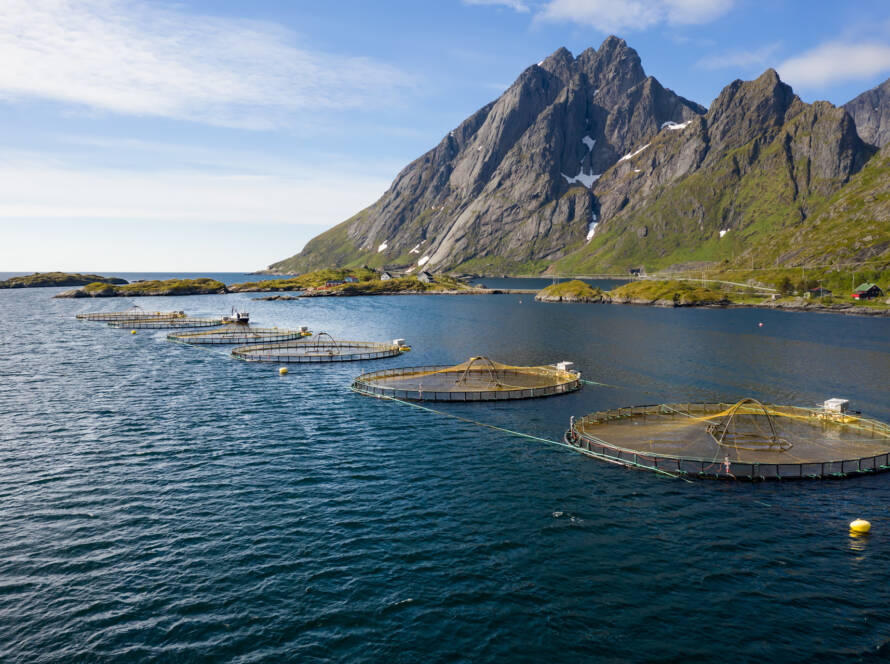
The first part of the AQUAPHOENIX project’s mission is to capture the sludge (waste) released by fish in open pen aquaculture farms. But that’s not all! Our partners in research, technology and industry are working to realise the circular potential of sludge. Learn about why and how we’re testing the uses of recycled sludge – from its conversion to biofertiliser and novel fish feed to the production of biogas, and even microalgae!
Sludge: a surprisingly rich resource
Sludge is rich in nutrients like nitrogen (N) and phosphorus (P), coming from leftover feed particles and fish faeces. In traditional aquaculture, sludge and the nutrients it contains are simply released into the surrounding environment, posing a risk to habitats and biodiversity if emissions are not carefully contained. However, the benefits of collecting and recycling this material are numerous. Sludge recycling makes further use of this product for climate-friendly aquaculture, agriculture and energy products.

Addressing the nutrient crisis with sludge
Sludge collection shows promising potential to lower the environmental impact of aquaculture and upscale production sustainably.
More broadly, sludge collection and recycling tackles the nutrient crisis by providing a domestic source of important nutrients, which can be used to produce assets like biofertiliser and bio-feed in the European Union (EU). Currently, the EU imports 45% of N and 46% of P inputs for food production, and relies on a few key suppliers (Russia, Egypt and Algeria for N; Morocco and Russia for P) (1). The COVID-19 pandemic showed us the importance of having resilient food systems and supply chains. By unlocking the potential offered by circular production within the EU, we can ensure a reliant supply of key inputs for food production in the future.
The many applications of sludge
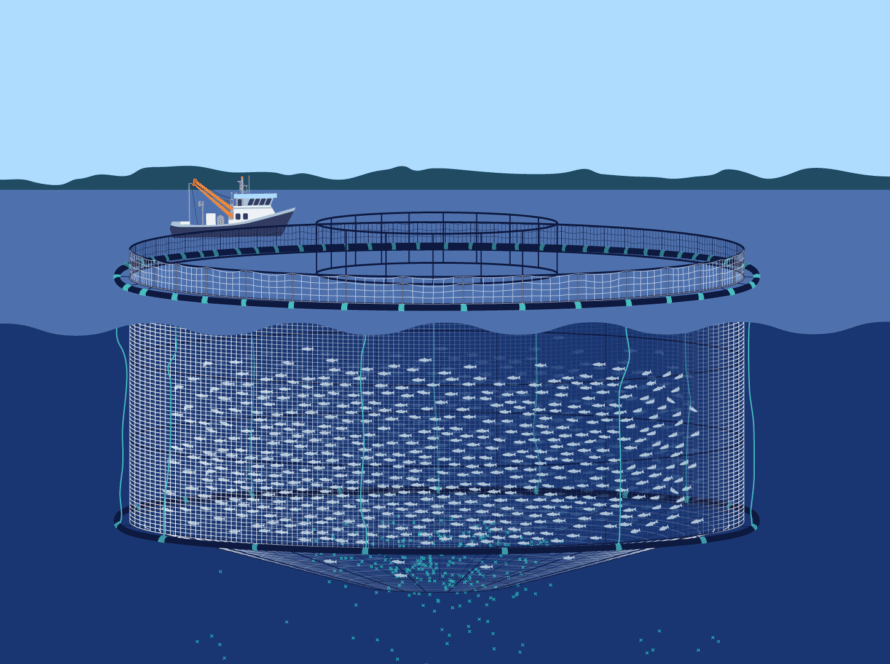
Within the AQUAPHOENIX project, sludge will be collected directly from fish farms by industry partners, using novel technology developed by our partners at Framo. From there a number of uses for sludge will be tested. Its most straightforward use will be tested at our Åland demo-sites, where sludge is used as a manure fertiliser for regional agriculture. Sludge collected from our Hardangerfjord demo sites will be further processed to isolate mineral forms of N and P. These compounds will be tested to produce biofertiliser and feed on an industrial scale by our partners at EasyMining.

The AQUAPHOENIX project aims to capture all possible sidestreams of sludge, including for biogas production (as led by BIOKRAFT and Ragn-Sells). Biogas is a renewable alternative for fossil fuels produced in large digesters inoculated with microorganisms that decompose organic material. In natural environments, this decomposition happens when there is no oxygen (such as wetlands).

Industrial biogas production requires anaerobic conditions as well, and often uses manure or food waste, with sludge remaining an untapped resource. Our partners BIOKRAFT and Ragn-Sells will demonstrate sludge’s application as feedstock (organic material for biogas production).
At several points in the valorisation chain, sludge dewatering processes take place. For example, after fish farmers collect sludge they will dewater to lower the weight and smoothen transportation logistics. Rather than binning this water that is rich in N and P, partners will explore its full potential. Aside from testing its use for biofertiliser production (EasyMining), researchers at NORCE set out to test it as a nutrient rich medium for growing microalgae.
At AQUAPHOENIX we bring together a diverse consortium of experts in fish farming, technology, research and public outreach to push the limits of sustainable aquaculture and circularity. Project results don’t just stay in the lab. AQUAPHOENIX aims to empower policy makers and the broader society to drive change!