Skip to content Skip to footer

Aquaculture’s role in the circular economy

Explore the potential of aquaculture to contribute to the circular food economy, and how AQUAPHOENIX advances that potential.

What is the circular economy?

The circular economy is a system in which the value of consumer products and the resources they are made of is extended, for as long as possible. It aims to minimise waste and create multiple types or “pathways” of value from resources and products.

What is the circular food economy?

Today, most of our food production systems are linear, meaning that resources are taken from the earth and processed into final outputs. The end product is directly intended for consumption, such as a salmon filet.

In contrast to this linear approach to food production, many stakeholders including producers, decision-makers, and researchers are calling for the use of byproducts (materials generated during production that can be used directly without much industrial processing, such as parts of the fish that can be used for fish oil supplements) and sidestreams (items that need more industrial processing before reuse, like fish waste) to generate new value. This reuse of resources, which would otherwise go astray, to create new value is a key principle of the circular economy.

The benefits of the circular economy are remarkable. Applying its principles could increase gross domestic production by 0.5% and create 700,000 jobs in the European economy by 2030. Increased production efficiency is also linked to lower greenhouse gas emissions, while the reduction of waste helps limit environmental impacts like habitat degradation, the spread of diseases, and the loss of biodiversity. In the circular economy, food by-products are considered organic resources that are free from contaminants and can safely return to the environment or can provide additional value for foods, packaging, biogas and more applications.
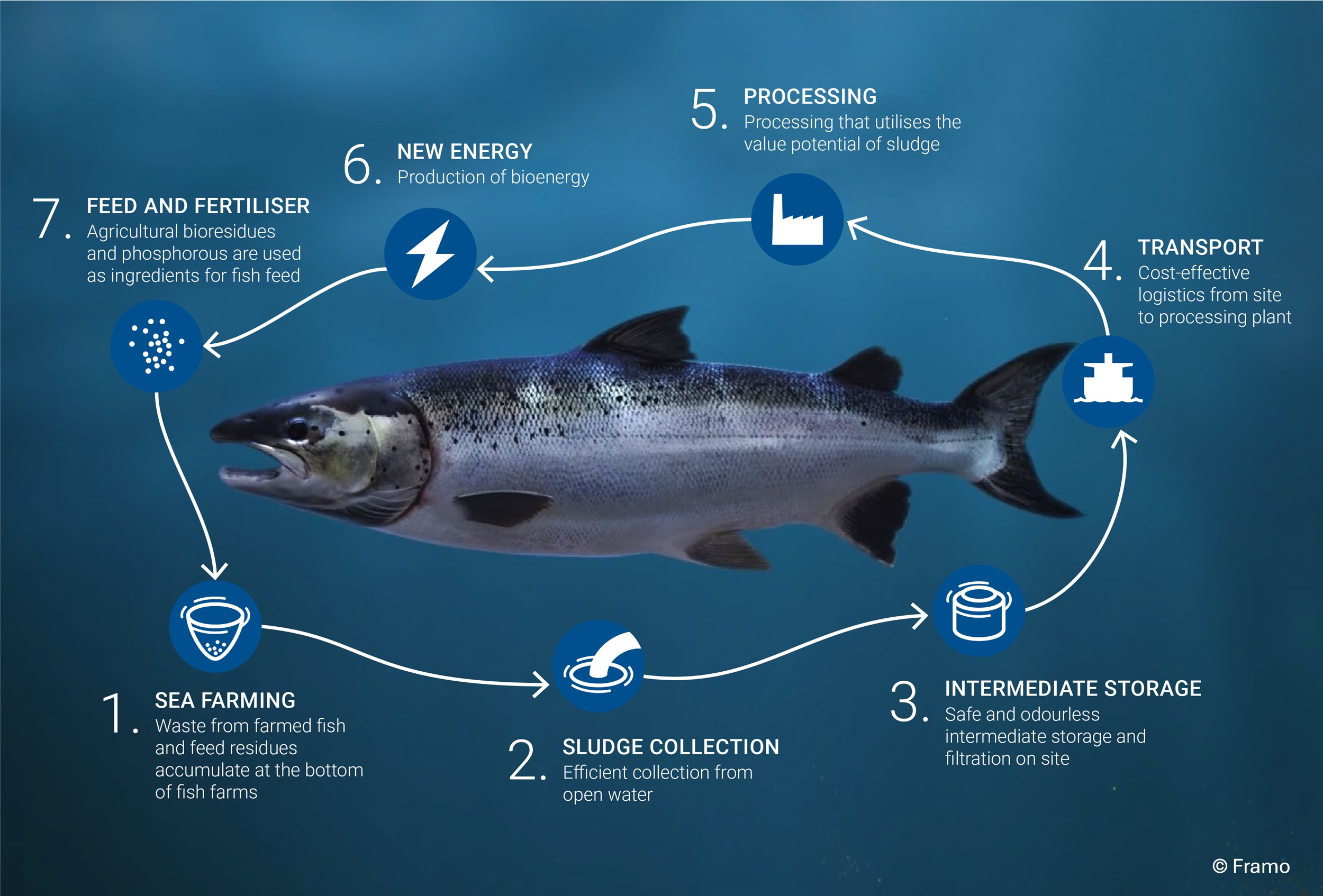
A fish with a cycle of 7 icons around it. Arrows are pointing from one icon to the next, forming a closed cycle around the fish. The seven icons are: 1) sea farming, 2) sludge collection, 3) intermediate storage, 4) transport, 5) processing, 6) new energy, and 7) feed and fertiliser.
Illustration of how sludge collection extracts value from fish waste and enables circularity (photo: Framo)
How AQUAPHOENIX contributes to circularity

The aquaculture industry, a leader in innovation, is already testing circular economy principles. AQUAPHOENIX is one of the pioneering projects in Europe that develops technologies for testing and valorising a surprisingly valuable sidestream that is gaining traction in the circular conversation: sludge (fish waste). Its mission actively reduces environmental impacts, enhances sustainability, and drives progress towards zero pollution and a circular economy within the industry.

Over a four-year period, AQUAPHOENIX partners are developing and demonstrating technology for collecting sludge from active fish farms and valorising its conversion into sustainable agriculture, aquaculture and energy products.

AQUAPHOENIX is paving the way alongside other exciting technological developments. More innovations in the sector include repurposing shellfish waste (chitin valorised to biomaterials) and waste processing by black soldier flies. Pilot examples like these continue to inspire the aquaculture industry and the broader economy.
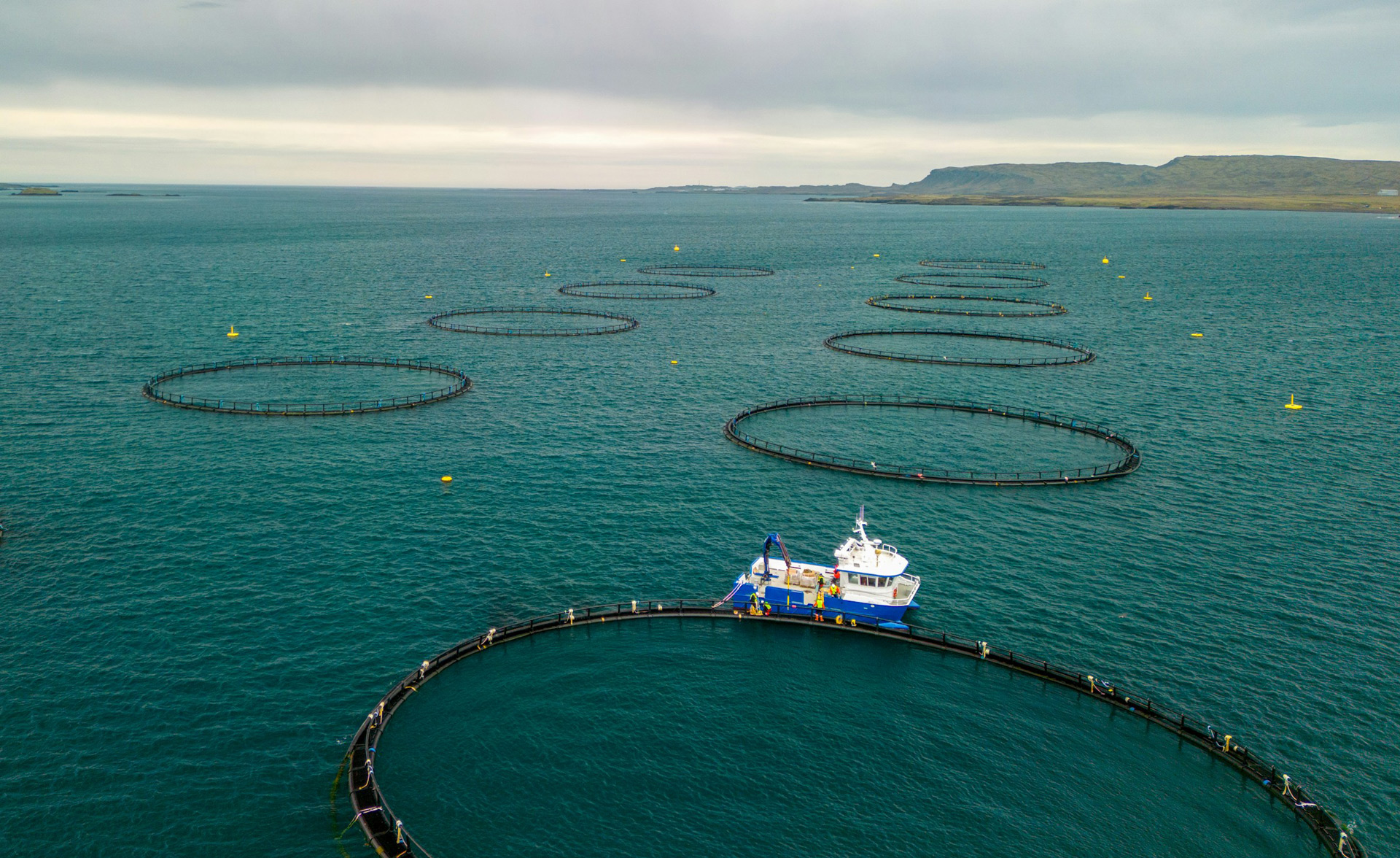
Aerial shot of circular fishing nets at sea (photo: Ed Wingate)
Why circular aquaculture is crucial for climate and ocean milestones

“Mission Restore Our Ocean and Waters is one of the five European Missions looking at strategic objectives across the European Union. Within Mission Ocean, aquaculture is one of the sub-areas that was identified. There is a commitment to promoting low impact, zero carbon and circular aquaculture. The AQUAPHOENIX project directly contributes to those three areas,” – David Bassett, European Aquaculture Technology and Innovation Platform (EATiP) Secretary General and AQUAPHOENIX Work Packages 5 & 6 lead.

As Bassett notes, the transition to circular aquaculture is key in achieving European and worldwide targets for sustainable development. The European Union (EU) sets the example for a sustainable, climate-neutral and resource-efficient market, in which our food systems play a huge role.

Circular aquaculture increases sustainability of EU produced seafood while lowering environmental impacts, directly contributing to Mission Restore our Ocean and Waters, the Zero Pollution Action Plan, the Biodiversity Strategy for 2030 and the Farm to Fork Strategy.

SIGN UP FOR
THE LATEST NEWS

Logo of AQUAPHOENIX: A phoenix head and two wings, as if flying towards the camera. The head has a blue colour with a dark blue beak. The left wing has a blue colour and the right wing has a green-blue colour. The name 'AQUAPHOENIX' is written in block letters below. Textured gradient and outlined fish cages representing movement, change, technology in the conversion of aquaculture waste.

hello@aquaphoenix.eu

The flag of the European Union (blue flag with a circle of golden stars) and the statement 'Funded by the European Union'

Funded by the European Union under grant agreement no.101182028. Views and opinions expressed are however those of the author(s) only and do not necessarily reflect those of the European Union. Neither the European Union nor the granting authority can be held responsible for them.

Website by Seascape Belgium © 2026. All rights reserved.
Cookie Policy | Privacy Policy