“The world needs more food, and aquaculture must be part of the solution. But technology alone will not deliver sustainable growth – we must also build systems around technologies in order to deliver the solutions. The technology effects and implications for science, regulation, markets and investment must be orchestrated in dialogue with policymakers and stakeholders, and be developed together to turn recovered nutrients into resources and circular solutions into industrial practice.”
— Hans Kleivdal, Head of Market Innovation, NORCE
At CBD COP17 in Yerevan, Armenia, AQUAPHOENIX was presented during a Nordic Pavilion session on circular nutrient management in aquatic food systems, hosted by UNEP, NORCE and Ragn-Sells
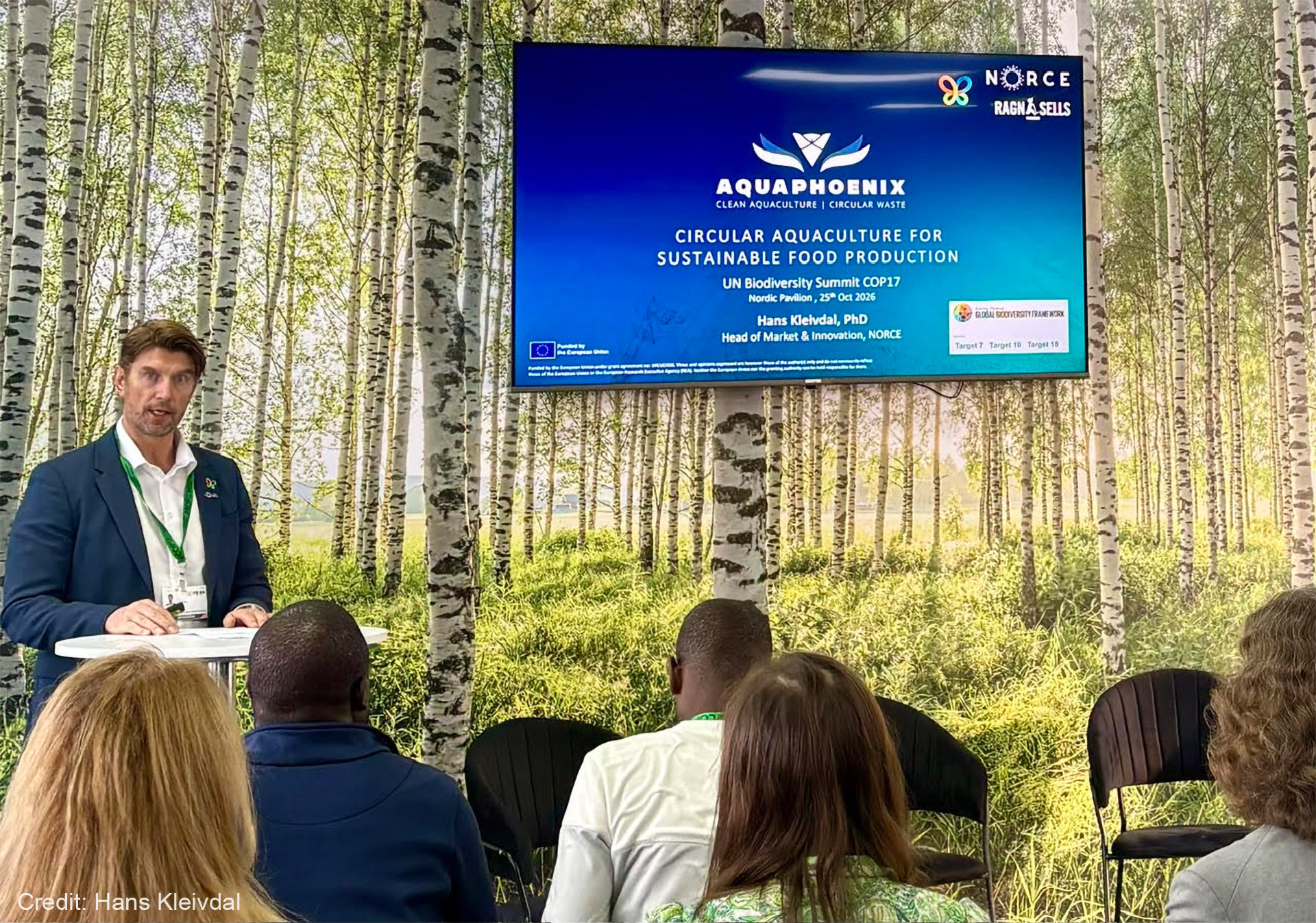
Keynote address: how AQUAPHOENIX can solve a pressing challenge
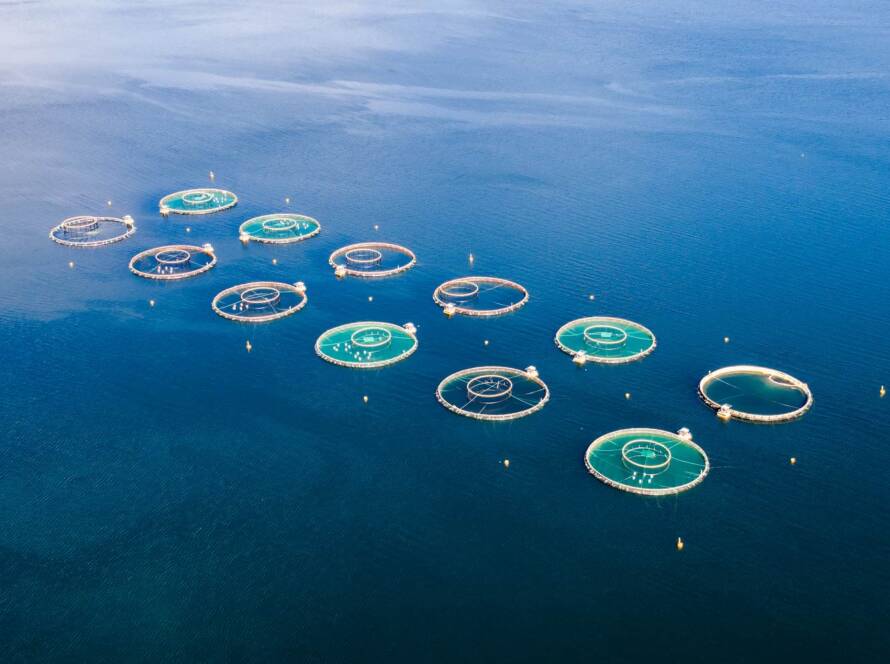
The session started from a fundamental global challenge: the world needs more food, and aquaculture must be part of meeting that demand. However, further growth must not come at the expense of aquatic ecosystems and biodiversity. AQUAPHOENIX addresses this challenge by demonstrating how fish sludge can be captured and transformed from an environmental burden into recycled nutrients, bioenergy and new raw materials.
Hans Kleivdal, Head of Market Innovation at NORCE Research (AQUAPHOENIX’s coordinating partner) delivered a keynote address emphasising the project’s approach to the key nutrients contained in aquaculture sludge, nitrogen and phosphorus (N & P). Rather than defining excess nutrients as a problem, AQUAPHOENIX approaches them as essential resources for food production. By collecting sludge from active fish farms, salvaging the nutrients it contains, and testing the circular uses of these nutrients, AQUAPHOENIX partners seek to keeping nutrients in productive use, reducing pollution and creating potential economic value.
Panel discussion: the importance of logistics across the value chains
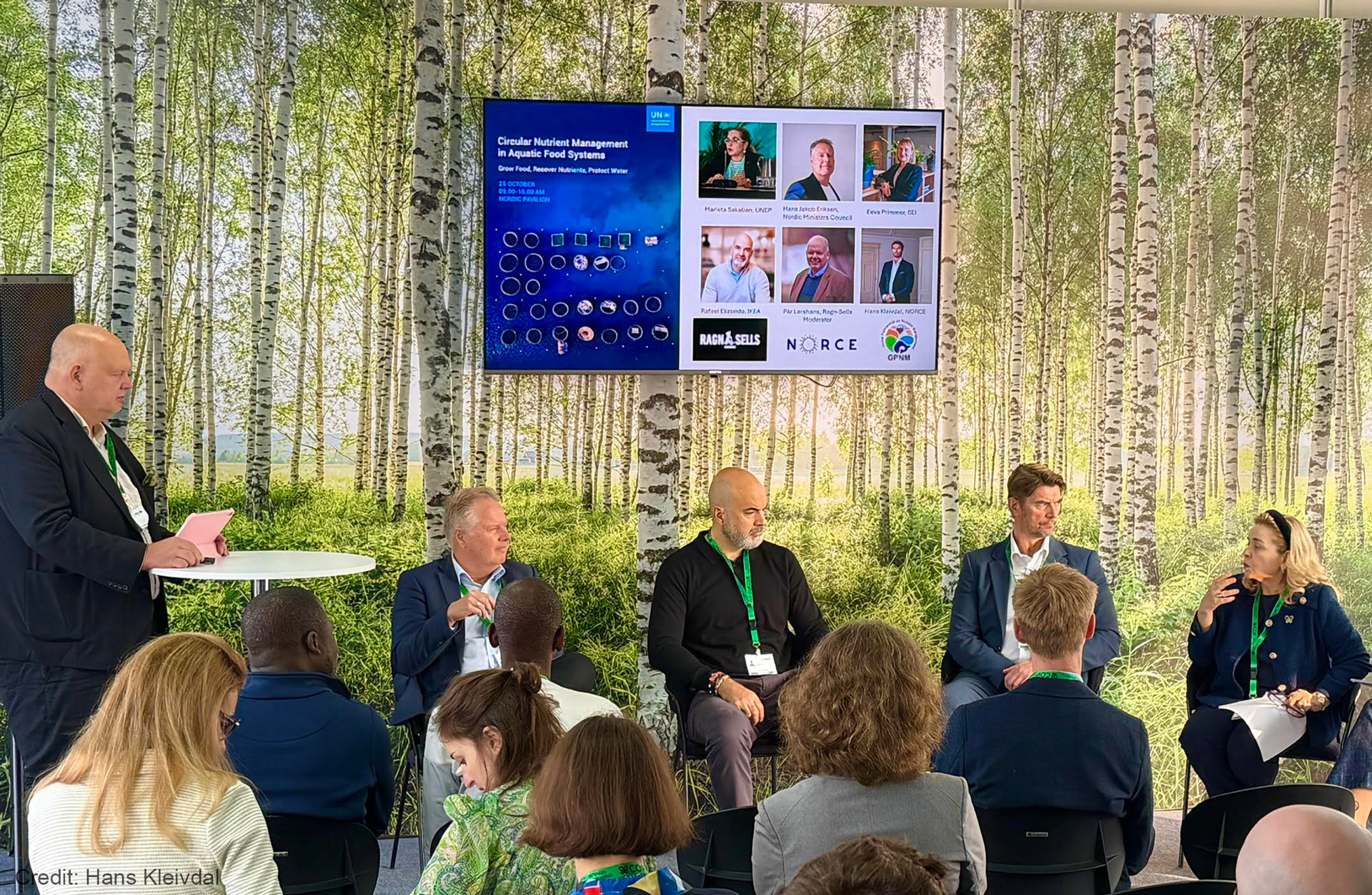
In a discussion with representatives of Ragn Sells (AQUAPHOENIX Work Package 5 leader), IKEA, and UNEP, a central theme was that technology alone is not enough. Individual technologies may be mature, but deployment depends on whether the entire circular value chain can function. Collection, processing, logistics, regulatory approval, financing, market access and demand for recovered products all need to be aligned. Uncertainty in one part of the chain can prevent investment elsewhere, even when the technical solution is ready.
Kleivdal explained that risk is distributed unevenly along the value chain, from fish farmers and technology providers to processors and companies developing end products from recovered nutrients. This is partly because actors have different capacities and tolerances for technical, regulatory, financial and market risk. As these uncertainties accumulate across the value chain, the combined risk can become too high for individual actors to invest, adopt a new solution or commit to purchasing the resulting products. This can prevent an otherwise mature technology from reaching the market.
For this reason, scaling circular aquaculture requires close dialogue with policymakers and a combination of a stronger enabling push and a more powerful market pull. The enabling push must reduce regulatory uncertainty, support demonstration and de-risk early investment across the value chain. At the same time, market-developing measures are needed to create demand, improve the business case for recovered resources and give producers confidence that circular products will find a market. These measures could include clearer standards and product criteria, public and private procurement, incentives for using recovered nutrients, and recognition of circularity and biodiversity benefits in markets and policy frameworks.
This message was strongly reinforced during the panel discussion. The contributions highlighted the need for science-based policy, involvement of the full value chain, and solutions that can work both for smaller-scale producers and industrial aquaculture. The discussion also underlined the importance of market demand for sustainably produced food and the policy conditions needed to make investment in nutrient recovery viable.
The engagement from IKEA and UNEP gave particular weight to this discussion. IKEA stressed the need to increase sustainable salmon production and saw clear potential to extend its strategic focus on circularity into the food system. This demonstrated that demand-side actors can become important drivers for circular aquaculture when sustainability and traceability are connected to purchasing decisions. UNEP placed the discussion firmly within the global biodiversity agenda, particularly Target 7, and emphasised the urgency of scaling circular solutions. UNEP’s intervention captured the central issue clearly: the real question is not whether nutrients are needed, but whether we can afford to keep losing them.
Key insight: collaboration as the key to scale
The session’s conclusion was therefore clear: science, regulation, markets and investment must move together if circular aquaculture is to scale. The strong engagement from both a major international food buyer and the UN environmental system also showed that AQUAPHOENIX addresses a challenge that resonates beyond the technology and research communities.
AQUAPHOENIX is particularly relevant to three targets in the Kunming-Montreal Global Biodiversity Framework:
➔ Target 7: Reduce pollution to levels that are not harmful to biodiversity. The target calls for reducing excess nutrients lost to the environment by at least half through more efficient nutrient cycling and use. AQUAPHOENIX contributes directly by developing and demonstrating systems for collecting fish sludge and recovering nitrogen and phosphorus before they are released into aquatic ecosystems.
➔ Target 10: Enhance biodiversity and sustainability in aquaculture and other food-production systems: The target calls for aquaculture to be managed sustainably through biodiversity-friendly and innovative approaches that improve resilience, long-term productivity and food security. AQUAPHOENIX supports this by enabling aquaculture to produce more food while reducing environmental pressure and keeping valuable resources in productive use.
➔ Target 18: Reform harmful incentives and scale up positive incentives for biodiversity: This target is highly relevant to the project’s system-innovation perspective. Circular nutrient value chains need policy frameworks, positive incentives and market-developing measures that distribute risk more fairly and create confidence for investment. A stronger enabling push and market pull can help technologies move from demonstration to deployment and ensure that recovered nutrients and circular products reach the market.
Taken together, the three targets describe the transition AQUAPHOENIX is seeking to enable: Target 7 defines the pollution challenge, Target 10 connects the solution to sustainable aquaculture and food security, and Target 18 addresses the incentives and market conditions needed for scaling. Progress on one target supports progress on the others.
The broader takeaway for AQUAPHOENIX is that the project is not only demonstrating technologies. It is also generating the operational evidence needed to understand how a complete circular value chain can work in practice, how risk is distributed between actors, and where targeted policy and market interventions are needed. This is essential if circular aquaculture is to contribute to more sustainable food production, healthier aquatic ecosystems and measurable progress on the global biodiversity targets.
Thanks to Hans Kleivdal.
Follow our progress! Subscribe to the AQUAPHOENIX newsletter.