Skip to content Skip to footer

AQUAPHOENIX researchers conduct first seafloor sampling in Hardangerfjord

At the beginning of September 2025, AQUAPHOENIX  partners carried out the first seafloor sampling campaign in Hardangerfjord for Work Package 2 which focuses on assessing the environmental impact of aquaculture emissions and evaluating the effects of sludge removal. The Work Package 2 team brings together researchers from NORCE, NIOZ, and LUKE, working in close collaboration with IMR.

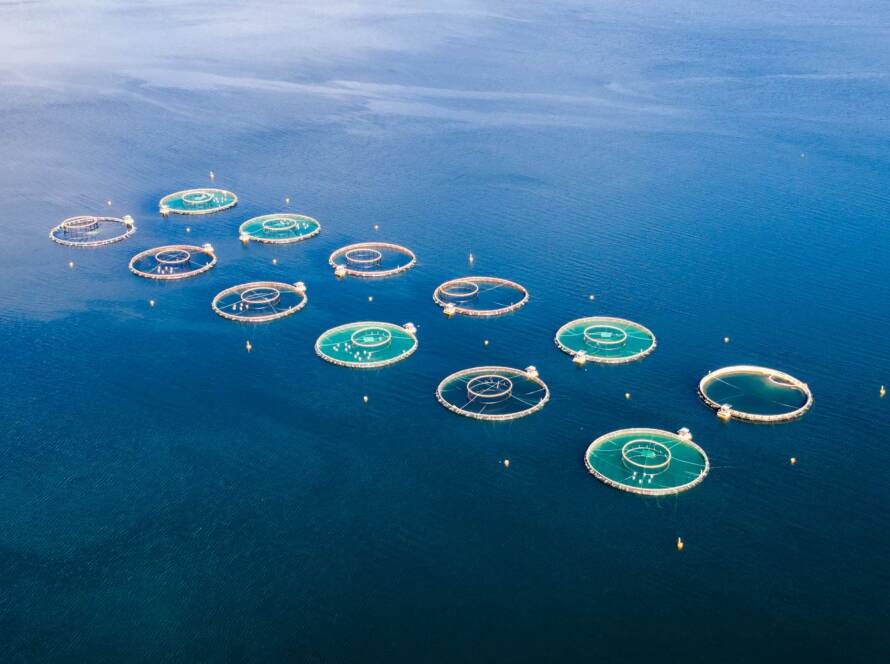
This campaign was conducted on IMR’s research vessel Hans Brattström, extending a planned cruise originally dedicated to water column observations (related to AQUAPHOENIX Work Package 3). During the fieldwork, Einar Bye-Ingebrigtsen and Gunhild Bødtker (both NORCE) collected seafloor samples using a Van Veen grab at multiple locations: next to active fish farms, at nearby reference sites at similar depths, and at two deeper basin stations.

Van Veen grab on a boat on the right side of the picture. On the left side is a view of aquaculture cages at sea. A few mountain tops are in the back and the sky is clouded.
The Van Veen grab was used to collect seafloor samples near active fish farms in Hardangerfjord, Norway.

From these samples, the team will study both macrofauna (visible animals living in the sediment) and microbial communities. Macrofauna will be identified using traditional taxonomic counts combined with modern genetic approaches, while sediment microbes will be analyzed using metagenomics, which provides insight into their diversity and function.

Person dressed in rainproof clothing working on a boat at sea using metal equipment layered in 3 compartments. The person is wearing plastic gloves and handling wired equipment at the upper compartment. Inside the two lowest compartment is a partly metal and plastic bucket. Inside the middle compartment is a plastic bucket. The middle compartment is attached to metal rope going upwards.
Sorting of material collected with a Van Veen grab.

The sampling was successfully completed thanks to the excellent support from the vessel crew as well as Eide’s and Lingalaks’ local farmers – and favorable weather conditions.

Next, Work Package 2 will focus on characterizing sludge material in terms of nutrient release and oxygen consumption. We will also collect layered sediment cores for incubation experiments, which will help us understand how matter cycles at the seafloor. Additionally, these cores will allow us to look back in time and reconstruct how aquaculture activities have influenced the fjord’s benthic ecosystem over recent decades.

A metal device is placed on a metal raster with underneath a metal compartment. The device consist of two grabs in the form of an X, and are attached to the sides of the compartment of the device. In the back is the sea with white foam and a few mountain tops. The sky is cloudy and white.
Van Veen grab used by researchers to sample the seafloor.

SIGN UP FOR
THE LATEST NEWS

Logo of AQUAPHOENIX: A phoenix head and two wings, as if flying towards the camera. The head has a blue colour with a dark blue beak. The left wing has a blue colour and the right wing has a green-blue colour. The name 'AQUAPHOENIX' is written in block letters below. Textured gradient and outlined fish cages representing movement, change, technology in the conversion of aquaculture waste.

hello@aquaphoenix.eu

The flag of the European Union (blue flag with a circle of golden stars) and the statement 'Funded by the European Union'

Funded by the European Union under grant agreement no.101182028. Views and opinions expressed are however those of the author(s) only and do not necessarily reflect those of the European Union. Neither the European Union nor the granting authority can be held responsible for them.

Website by Seascape Belgium © 2025. All rights reserved.
Cookie Policy | Privacy Policy