Skip to content Skip to footer

Meet the scientists measuring the environmental impact of clean aquaculture

The AQUAPHOENIX project is piloting ground-breaking technology that will collect and remove sludge (aquaculture waste) from open sea fish pens in Norway and Åland. This technology has the potential to transform how we manage waste from open pen aquaculture – and it is also expected to have a positive impact on the surrounding  environments. 

Marine researchers are currently working to precisely measure the environmental impact of sludge collection, beginning with assessments of the Norwegian fjord environment.

Understanding local environments and aquaculture’s effects 

“What I still find fascinating about Norway is that you have these deep fjords in the middle of the mountains,” says Helena Hauss, Chief Scientist at NORCE. “There is a full, deep sea food web beneath the surface, including species that are quite delicate, such as cold water coral habitats.”

Helena Hauss, Chief Scientist at NORCE

This distinctive fjord ecosystem is also well-suited to aquaculture. As Pål Sævik, Research Scientist with the Institute of Marine Research explains, “Fjords are sheltered areas that are often well-ventilated with oxygen, offering good conditions for fish farming.”
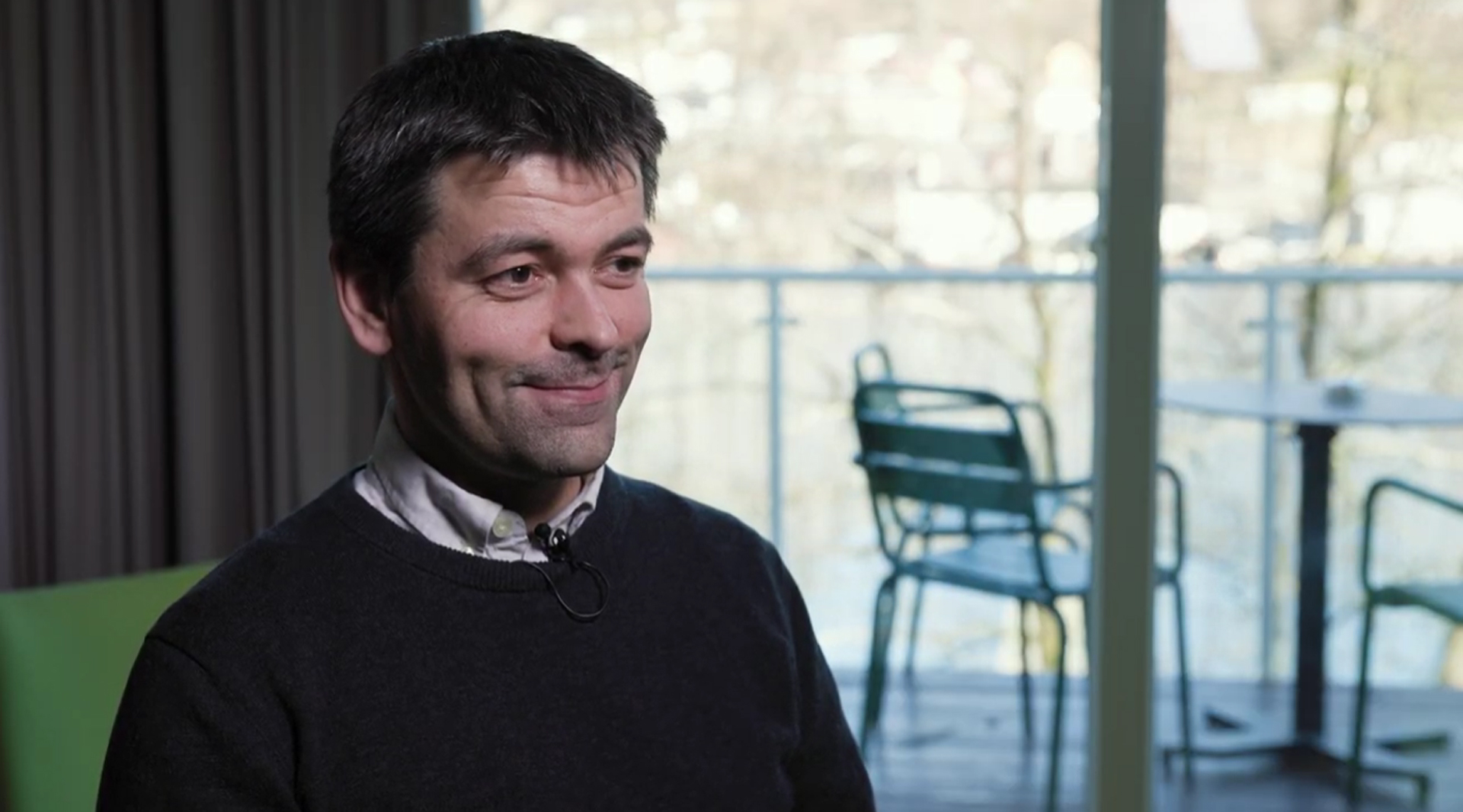
Pål Sævik, Research Scientist with the Institute of Marine Research

However, the growth of the industry poses several environmental challenges. “You can only put so many fish farms in a fjord before it becomes too much,” explains Sævik. “If you have too much organic matter coming down from the fish pens, and not enough fresh water coming in, conditions become anoxic [oxygen depleted]. There is a risk of pollution and toxic gases that can even kill the fish.” Other effects include harmful algae blooms and the loss of nutrients that are important for local species’ survival. Learn more about AQUAPHOENIX’s efforts to manage the nutrient cycle in this article.

These risks have created a need to manage waste, reduce pollution, and keep the ecosystem in balance while allowing producers to operate safely and sustainably. AQUAPHOENIX is working to fulfil this need, with industry-leading partners currently working to install novel technologies that capture sludge from the bottom of pens and prevent too much organic matter from entering the surrounding environment.

The impact of clean aquaculture technology

Sludge collection shows promising potential for capturing organic waste matter from aquaculture and safely transporting it to land, where it will be recycled into sustainable assets in later stages of the project. But the precise nature of this technology’s impact needs to be quantified in order to ensure positive effects and widespread uptake. 

Within AQUAPHOENIX, Hauss and Sævik are co-leading large-scale efforts to assess the environmental impact of traditional aquaculture and measure the ecological effects of the project’s efforts to reduce sludge pollution. Hauss leads a team of scientists from NIOZ (Netherlands) and NORCE (Norway) who are studying the impacts of aquaculture and sludge collection on the benthic (seafloor) ecosystem, while Sævik leads studies to assess the effect of sludge removal on the pelagic ecosystem. 

“Our methods are complementary to each other,” Hauss says. Their work involves characterising the contents of sludge itself, as well as looking at the extent to which sludge removal can mitigate pollution, increase biodiversity and restore marine ecosystems.
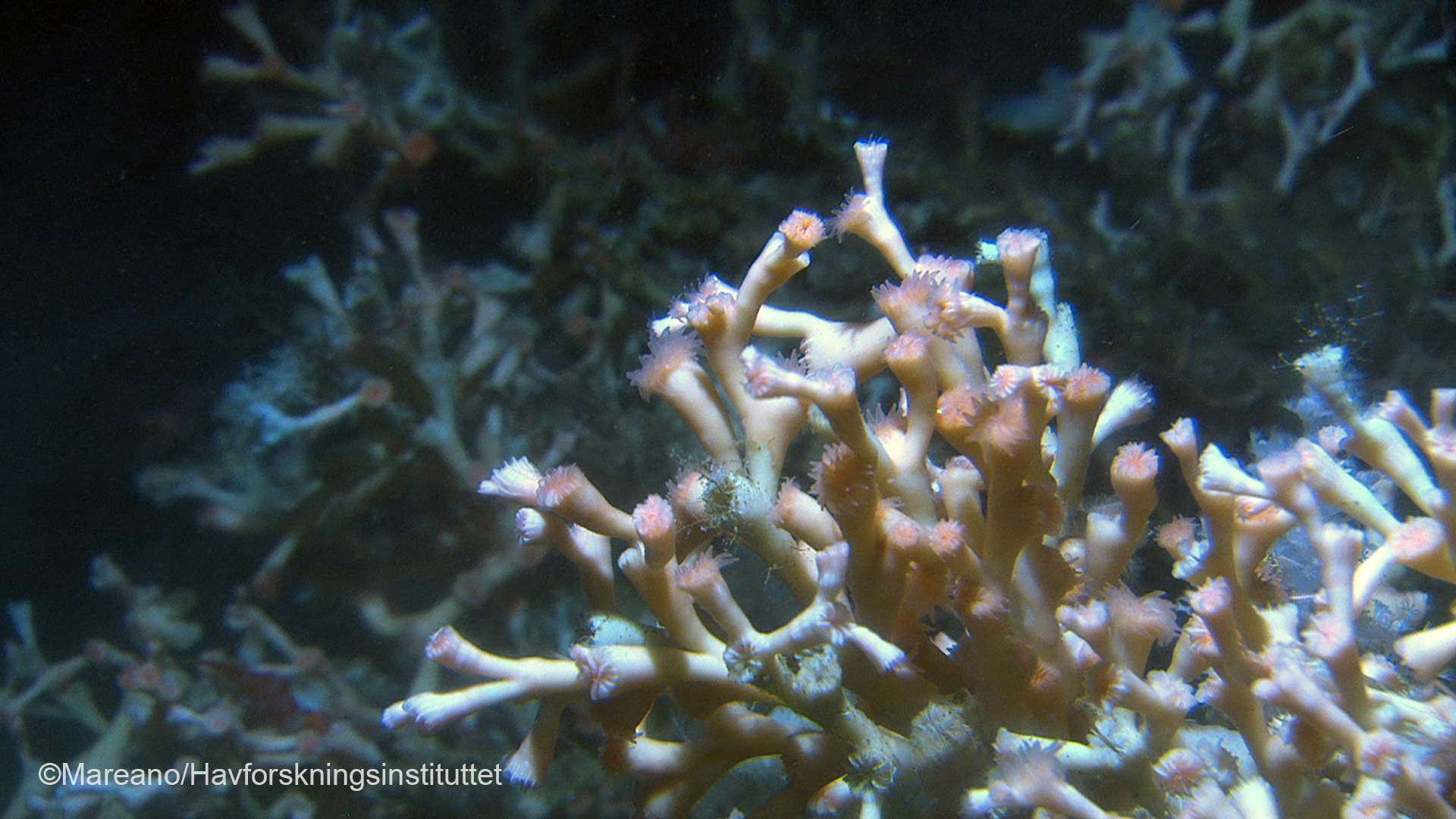
The coral species Lophelia pertusa thrives in cold waters and can be found in Hardangerfjord

An important aspect of these scientific efforts is understanding how the fjords have changed as the aquaculture industry has evolved. Hauss’ team is planning to profile the history of the fjords by collecting samples from the seabed containing information from up to 120 years in the past. This will help chart the environmental impact of aquaculture emissions on the seabed over the years. At the same time, Sævik’s team will use computer models to simulate how the fjord environment might change years into the future, with and without the implementation of sludge collection technologies. “With these models, we can test different scenarios,” he says. 

While AQUAPHOENIX testing of sludge collection is in its initial stages, the team are hopeful about its effects. “We do expect that if we quantitatively remove sludge, that we will get an improvement of the habitat,” says Hauss. “We hope we can use the data to confidently estimate what change will look like.”

Collective efforts to test and verify the power of sludge collection are intended to help grow the industry sustainably, while protecting the ecosystem for future generations.  “The aquaculture industry has been very innovative, and still is. They are trying to find solutions to these problems that they are faced with, and we are happy to be a part of that”, Sævik says.

As Hauss notes, the research that will be conducted in AQUAPHOENIX is designed to facilitate material change. “It’s not just research to fulfill curiosity and understanding, but also to drive an improvement in the industry and to make better and more sustainable use of these really beautiful ecosystems.”
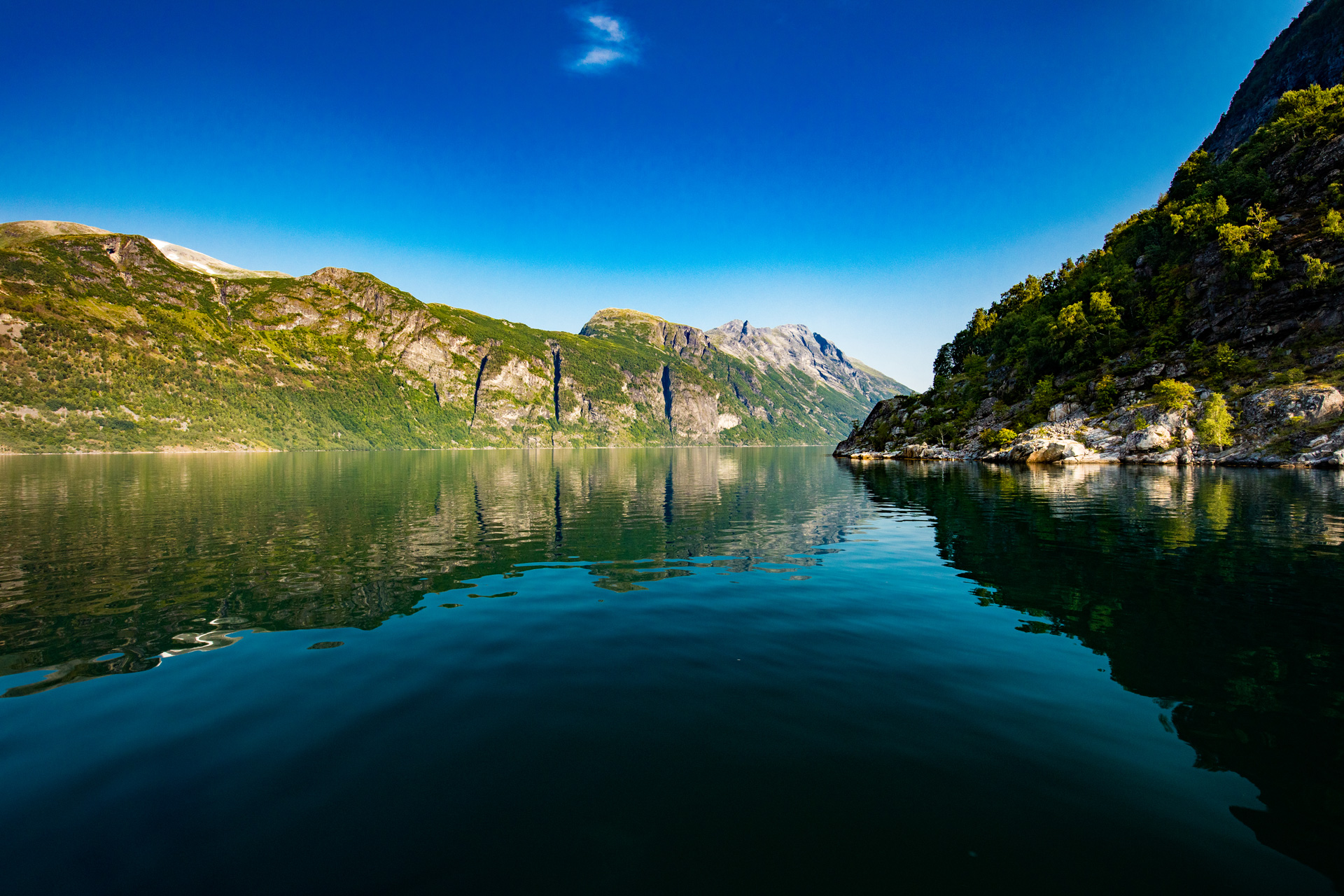
Panorama of Geirangerfjord in Norway

SIGN UP FOR
THE LATEST NEWS

Logo of AQUAPHOENIX: A phoenix head and two wings, as if flying towards the camera. The head has a blue colour with a dark blue beak. The left wing has a blue colour and the right wing has a green-blue colour. The name 'AQUAPHOENIX' is written in block letters below. Textured gradient and outlined fish cages representing movement, change, technology in the conversion of aquaculture waste.

hello@aquaphoenix.eu

The flag of the European Union (blue flag with a circle of golden stars) and the statement 'Funded by the European Union'

Funded by the European Union under grant agreement no.101182028. Views and opinions expressed are however those of the author(s) only and do not necessarily reflect those of the European Union. Neither the European Union nor the granting authority can be held responsible for them.

Website by Seascape Belgium © 2026. All rights reserved.
Cookie Policy | Privacy Policy